Douglas Alexander is expected to tell the UK-Italy conference that last week’s UK-EU agreement represents “a floor - a proof of concept, not a ceiling” for Britain’s ambitions.
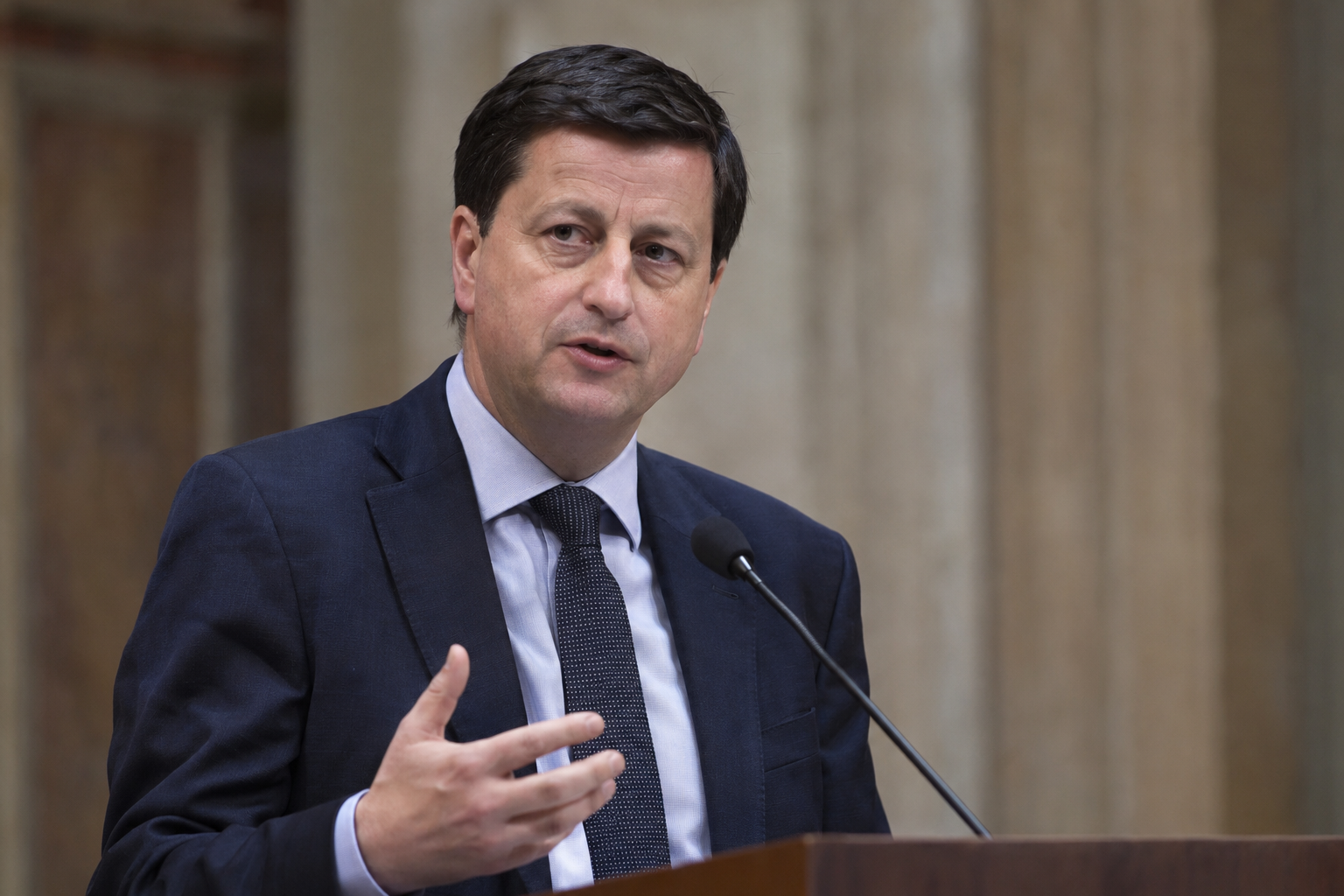
In remarks scheduled for the Pontignano Conference in Rome later today [27 November], Mr Alexander will characterize last week’s UK-EU agreement as “a floor - a proof of concept, not a ceiling on our ambitions”. According to UK GOV.UK, he will warn that no mid-sized country can determine its future alone in an era of great power rivalry and argue that repairing the UK’s ties with neighbouring countries is “fundamentally different from breaking up our own country”.
The speech follows the Prime Minister’s agreement of a new partnership with the European Union in Brussels a week ago. It also comes one day after the Government introduced the European Partnership Bill, which would put the agreement into law.
Mr Alexander will say: “A decade on, and contrary to the claims of the Brexiteers, we are living in a more uncertain and more dangerous world. People were right to want more control over their lives. Brexit was a democratic decision, and I respect it, but respecting a vote doesn’t mean denying the costs or consequences of that choice.”
He will continue: “Brexit is no longer an abstract idea or a series of impossible promises. It’s our reality. And we now know it has failed even on its own terms. The choice today is whether to settle for that diminished status quo, or seek to change it by giving our people more power, more control, and more hope for a better future.”
Mr Alexander will add: “What was agreed in Brussels last week should be regarded as a floor – a proof of concept, not a ceiling on our ambitions. We’re not interested in reopening old wounds from a decade ago. We’re simply being pragmatic and patriotic about what Britain and its people need in our fast-changing and increasingly dangerous world.”
He will also say: “We cannot deliver the change Britain needs over the next decade without changing our relationship with Europe. When the status quo is not working, you don’t stand still. You move forward. When the status quo is broken, you don’t ignore it. You fix it.”
Mr Alexander is also expected to discuss Scotland’s role in a partnership with Europe and address the 62 per cent of Scots who voted to remain in 2016.
He will say: “Scotland has never been made great by building walls. We were made great by building bridges. In 2016, 62 per cent of Scots voted to remain. That wasn’t a passing mood. It came from something old and deep in who we are. A nation that for centuries has been part of a multinational union and that has always looked outward, to Europe and to the world.”
Mr Alexander will continue: “For Scotland and the United Kingdom, partnership means pooling and sharing our resources. That is how Scotland stands taller in the world, as part of a country with a permanent seat on the UN Security Council, a leading place in NATO and one of the world’s largest economies.”
He will add: “I’m often asked why we want to return to the question of Europe but not that of Scottish independence. The answer is simple. Fixing our relationship with our neighbours is fundamentally different from breaking up our own country. Scotland’s story in Europe runs through interdependence, not independence.”
UK GOV.UK said Mr Alexander will describe young people as “the biggest losers of Brexit in the last decade”. He will point to the youth experience scheme agreed in Brussels, which will allow 100,000 young people from each side to spend up to three years working, studying, volunteering or travelling, as well as the UK’s return to Erasmus+ in 2027.
He will announce plans to meet the principals of Scotland’s universities next week as part of his regional empowerment roundtables. The discussions will consider how Scotland could become “the best place in Europe for Erasmus”.
Mr Alexander will say: “Edinburgh was once the UK’s leading Erasmus host university. I want Scotland’s young people first through the door.”
He will conclude: “Picture a 19-year-old in East Lothian who has never left the UK, studying in Bologna. Think of who she’ll meet, the friendships she’ll make, the languages she’ll learn. This is the generation to which we now owe a continent.”
Based on a UK GOV.UK news release · Read the original ↗