APOD
Astronomy Picture of the Day
Explore the universe! NASA’s APOD presents a different image or photograph of the cosmos each day, accompanied by a short explanation from a professional astronomer.
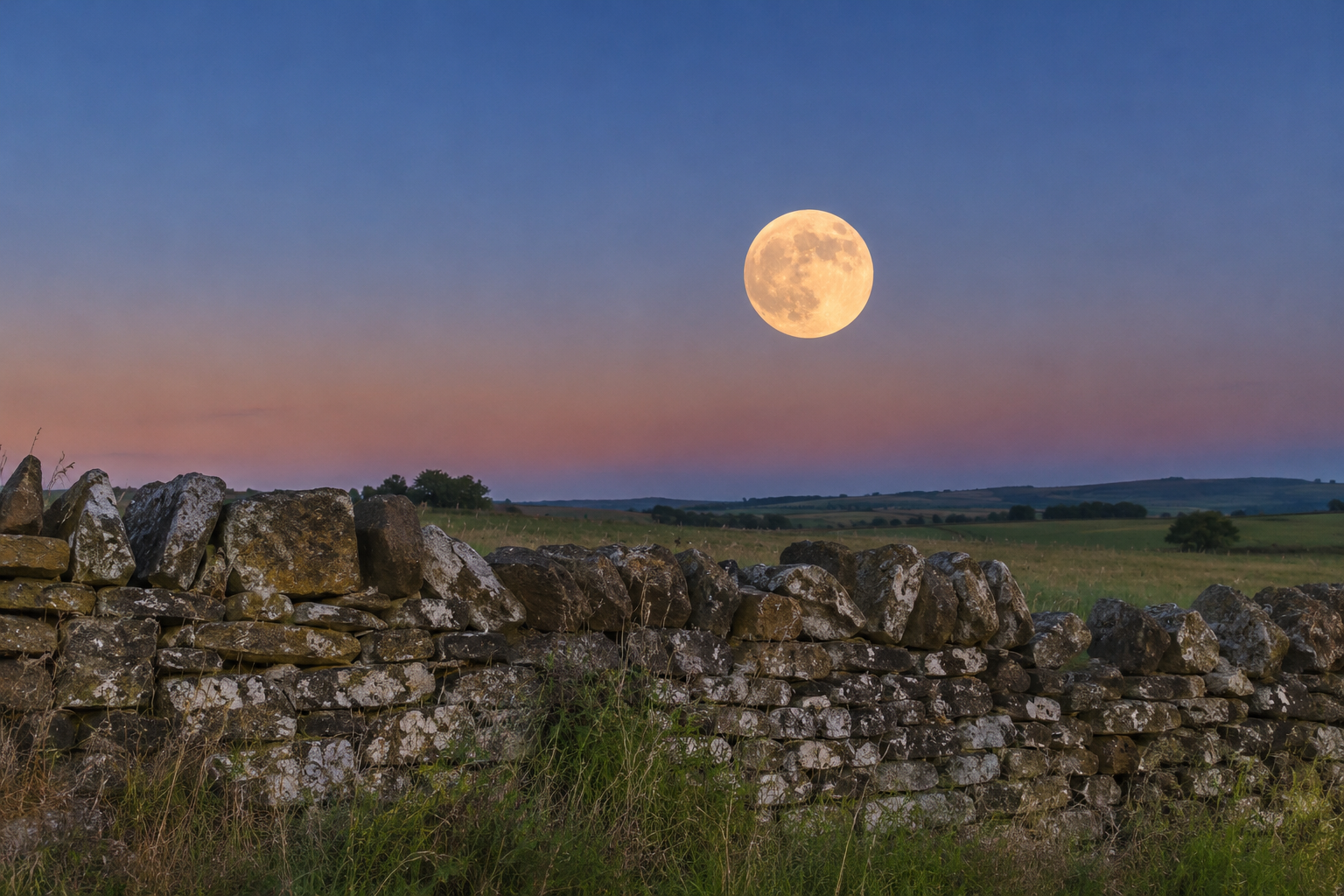
The Moon Watchers
Explanation: According to NASA, people across Earth could watch the Moon rise opposite the setting Sun on November 24. The large, bright Moon, then at its full phase, was easy to see in twilight above fields, fences, backyards and even stone walls. Sometimes called a Beaver Moon, November’s Full Moon was also close to perigee, the nearest point to planet Earth in the Moon’s elliptical orbit. NASA said that proximity made it one of the largest and brightest Full Moons, a phenomenon also known as a supermoon. November’s Full Moon was the first of four consecutive Full Moons occurring near perigee. The next opportunity to see a supermoon rise will come when the Cold Moon rises on December 23.
Tomorrow’s picture: remember where you parked
Date: November 27, 2026
Credit and Copyright: Marcella Pace
Authors & editors: Jerry Bonnell, Cecilia Chirenti, Robert Nemiroff, Keighley Rockcliffe
A service of: ASD at NASA / GSFC, NASA Science Activation & Michigan Tech. U.
Yesterday’s Image: APOD: 2026 November 26 – Eye in the Sky: The Milky Way over Lençóis
Based on NASA's Astronomy Picture of the Day · Read the original ↗