Night shift experience illustrates technology’s role in supporting Veteran care
During a busy night at the Richard L. Roudebush VA Medical Center in Indianapolis, a nurse was responsible for five Veterans while also managing a complex admission, administering chemotherapy and completing her first blood administration with VA’s new Federal Electronic Health Record (EHR).
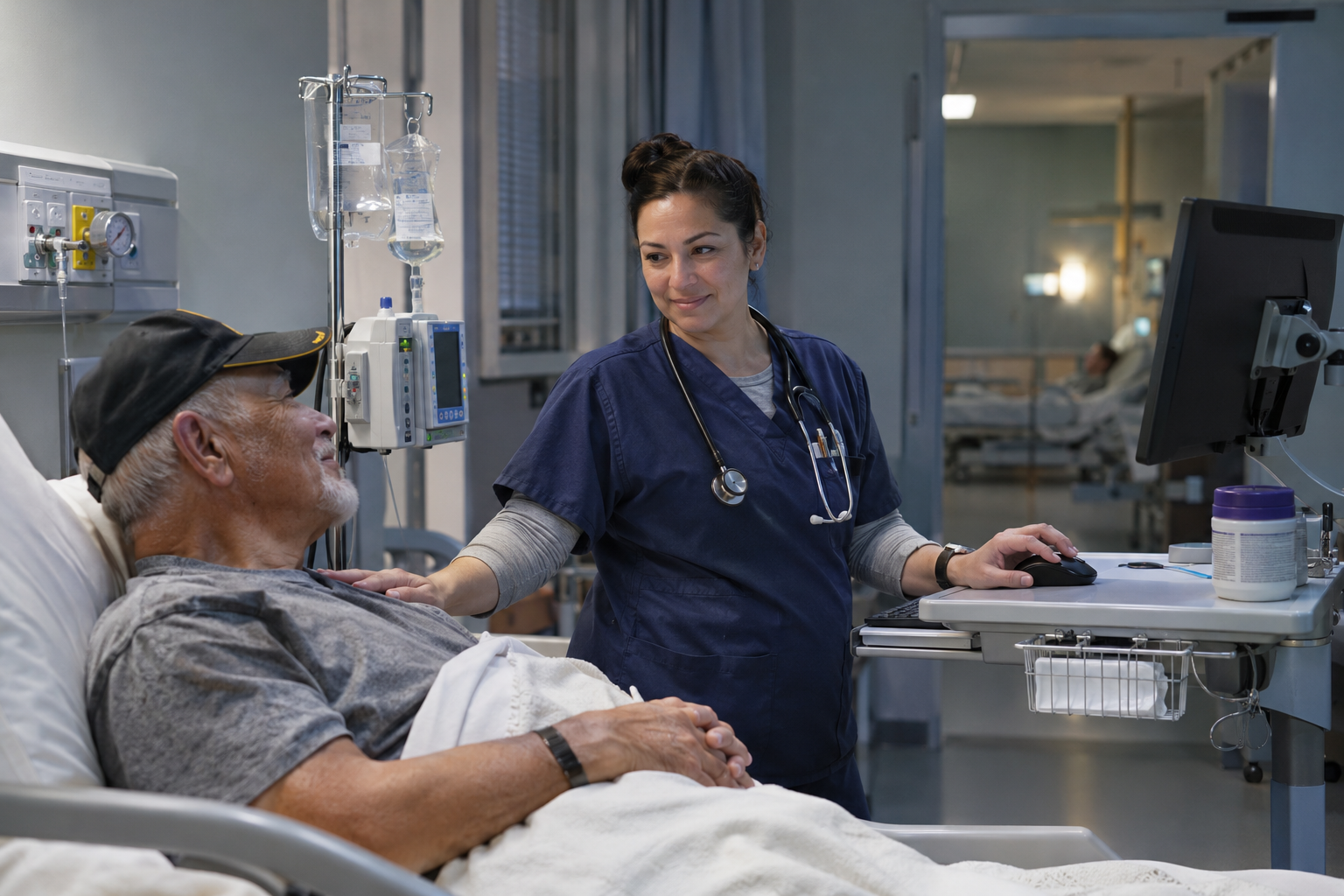
Despite the workload, the nurse was beginning to settle into a rhythm with the new system. Christie E. Artuso, Ed.D., RN, FACHE, chief nurse executive and associate director of patient care services, viewed the experience as an encouraging indication that the Federal EHR was becoming integrated into routine care after its implementation at the facility.
VA News said the experience also showed how modern technology can support the professionals providing Veteran care and help them remain focused on the Veterans they serve.
Maintaining connected care for Veterans
VA News noted that timely access to appropriate information is essential for Veterans receiving care through VA. Whether Veterans are managing chronic conditions, undergoing specialized treatment or experiencing complex hospital stays, their care teams need information to make decisions about their health.
According to VA News, the Federal EHR supports that process by consolidating important health information in one system and providing authorized members of a Veteran’s care team with a more complete view of the Veteran’s health.
“Veterans deserve a healthcare system that is as connected, modern and responsive as the care we would want for our own families,” Artuso said.
VA News reported that the Federal EHR allows nurses, physicians, pharmacists and other healthcare professionals to access documentation, medication details, laboratory results and treatment orders as care proceeds. The shared information is intended to support communication, treatment coordination and informed decision-making, particularly when a Veteran’s condition or care requirements change.
For Veterans, VA News said, this can allow providers to devote less time to locating information in separate systems and more time to coordinated, personalized care.
Providing support for Veteran care teams
VA News emphasized that each Veteran’s care experience involves a team of health care professionals working together to provide safe, high-quality treatment.
For nurses on overnight shifts, that work frequently involves addressing several patients’ needs, administering medications, monitoring changes in their conditions and coordinating with other care team members.
At VA Indianapolis, Artuso observed the Federal EHR becoming part of that work. By the second week after implementation, nurses had started incorporating the system into their daily routines, with the technology supporting care instead of diverting attention from it, according to VA News.
“With the Federal EHR supporting an uninterrupted rhythm, our VA staff is better positioned to fulfill our responsibility to provide Veterans with safe, high-quality, Veteran-centered care,” said Lee Payne, MD, MBA, CPE, FACEP, deputy under secretary for health and retired Air Force major general.
Updating care while keeping Veterans in focus
VA News characterized VA’s move to the Federal EHR as extending beyond the adoption of new technology. The agency said the transition is intended to help healthcare professionals collaborate more effectively and provide Veterans with coordinated, high-quality care.
For Artuso, seeing a nurse handle the pressures of a busy night shift while caring for five Veterans provided a meaningful illustration of that progress.
As VA continues moving to the Federal EHR, VA News said such experiences illustrate how a connected health record can assist care teams and help them concentrate on their central mission of caring for Veterans.
Based on a VA News news release by Nikki Verbeck · Read the original ↗