The European Parliament has named All of a Sudden, A Year of School, Calle Málaga, Fatherland, and How to Divorce During the War as the five films shortlisted for the 20th edition of the LUX Audience Award.
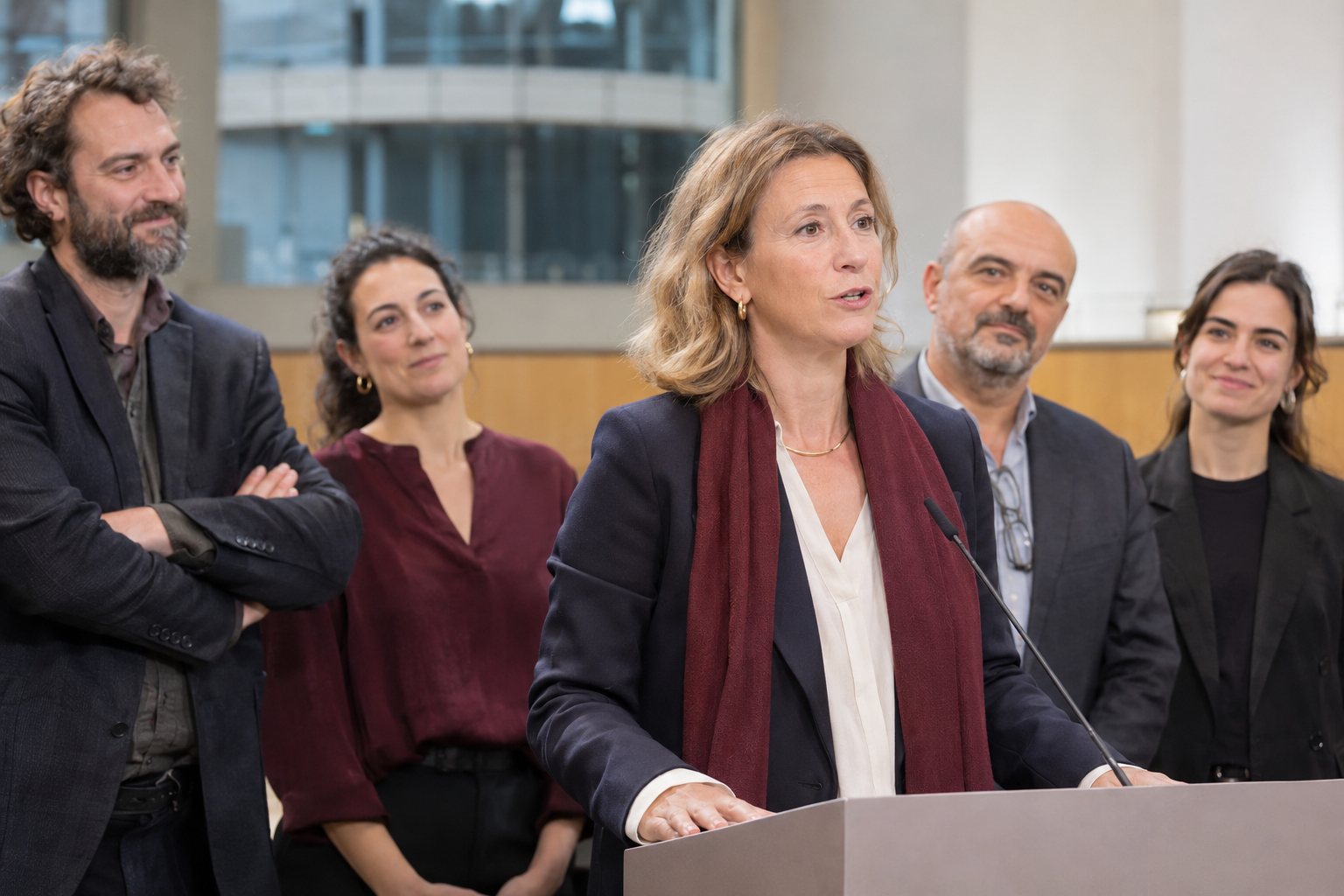
Vice-President Sabine Verheyen (EPP, DE) announced this year’s five finalists on Wednesday at the European Parliament in Strasbourg. She said: “The LUX Audience Award has come a long way in 20 years. This year’s selection is again a great one, full of European stories that touch our hearts and make us look at our shared continent with new eyes. I hope as many people as possible will watch these films in cinemas, and please don’t forget to rate them afterwards.”
Culture and Education committee chair Nela Riehl (Greens/EFA, DE) added: “This year’s shortlist explores who we are as a society: housing, ageing, alienation and belonging. A collection of moving, intimate films that go beyond the surface, make us laugh, challenge our beliefs and help us see the world through someone else’s eyes. Not an easy choice for the audience – but putting them centre stage is exactly what I love about the LUX Audience Award.”
All of a Sudden, from Japanese director Ryusuke Hamaguchi, is a French-language drama examining elder care. The head of a care facility attempts to establish an innovative philosophy that respects residents’ dignity, despite opposition from some staff members. Her path is profoundly changed when she meets a Japanese theatre director who is battling cancer. The two women develop a close, supportive friendship and work together to “make the impossible possible”.
Italian director Laura Samani’s A Year of School follows Fred, a young girl who relocates from Sweden to Italy after her father accepts a new job in Trieste. For her senior year, she joins the local Technical High School, where she is the only girl in an otherwise all-male class. Fred soon draws attention, particularly from three friends whose relationship is put under strain by her arrival. As she seeks acceptance, she is asked to give up parts of her identity.
Calle Málaga, directed by Morocco’s Maryam Touzani, is a comic drama about an elderly Spanish woman in Tangier. When her daughter returns intending to sell the apartment where she has lived throughout her life, the woman fights to stay. Her efforts to recover her home and possessions unexpectedly lead her to rediscover love and sensuality.
Polish director Paweł Pawlikowski’s Fatherland focuses on Nobel Prize-winning writer Thomas Mann and his daughter Erika, an actress, writer and rally driver. During the summer of 1949, at the height of the Cold War, they embark on a difficult and emotional journey by road from US-dominated Frankfurt to Soviet-controlled Weimar. Thomas Mann is returning home after 16 years in exile, most of them spent in the US, and must confront both a divided country and serious fractures within his family.
How to Divorce During the War, by Lithuanian director and screenwriter Andrius Blaževičius, takes place in Vilnius in 2022. A woman decides to seek a divorce as Russia invades Ukraine. While the couple face the collapse of their relationship, the continuing war complicates and overshadows the divorce proceedings.
According to the European Parliament, citizens throughout the EU and MEPs will jointly select the LUX Audience Award winner. The Parliament will organise free screenings and discussions about the nominated films with MEPs in Brussels, Strasbourg and EU countries.
A platform where the public can rate the nominated films will remain open until April 2027. The winner will subsequently be revealed during a ceremony at the European Parliament in Strasbourg, attended by representatives of the shortlisted films.
The LUX Audience Award has been presented annually since 2007 by the European Parliament and the European Film Academy, working in partnership with the European Commission and the Europa Cinemas network. The organisers say the award is intended to encourage dialogue and engagement between politics and the public through cinema. The 2027 competition is its 20th edition.
The European Parliament said the nominated films deal with European values and seek to raise awareness of major contemporary social and political topics. These include elder care, workers’ rights, social protection, cultural differences, education, inclusion, gender equality, housing, democracy, national identity, restorative justice, the place of artists and intellectuals during political crises, and war’s effects on individuals.
Based on a European Parliament news release · Read the original ↗