NASA’s Astronomy Picture of the Day (APOD) invites readers to discover the cosmos through a different daily image or photograph of the universe, accompanied by a short explanation from a professional astronomer.
Barnard 68: Dark Molecular Cloud
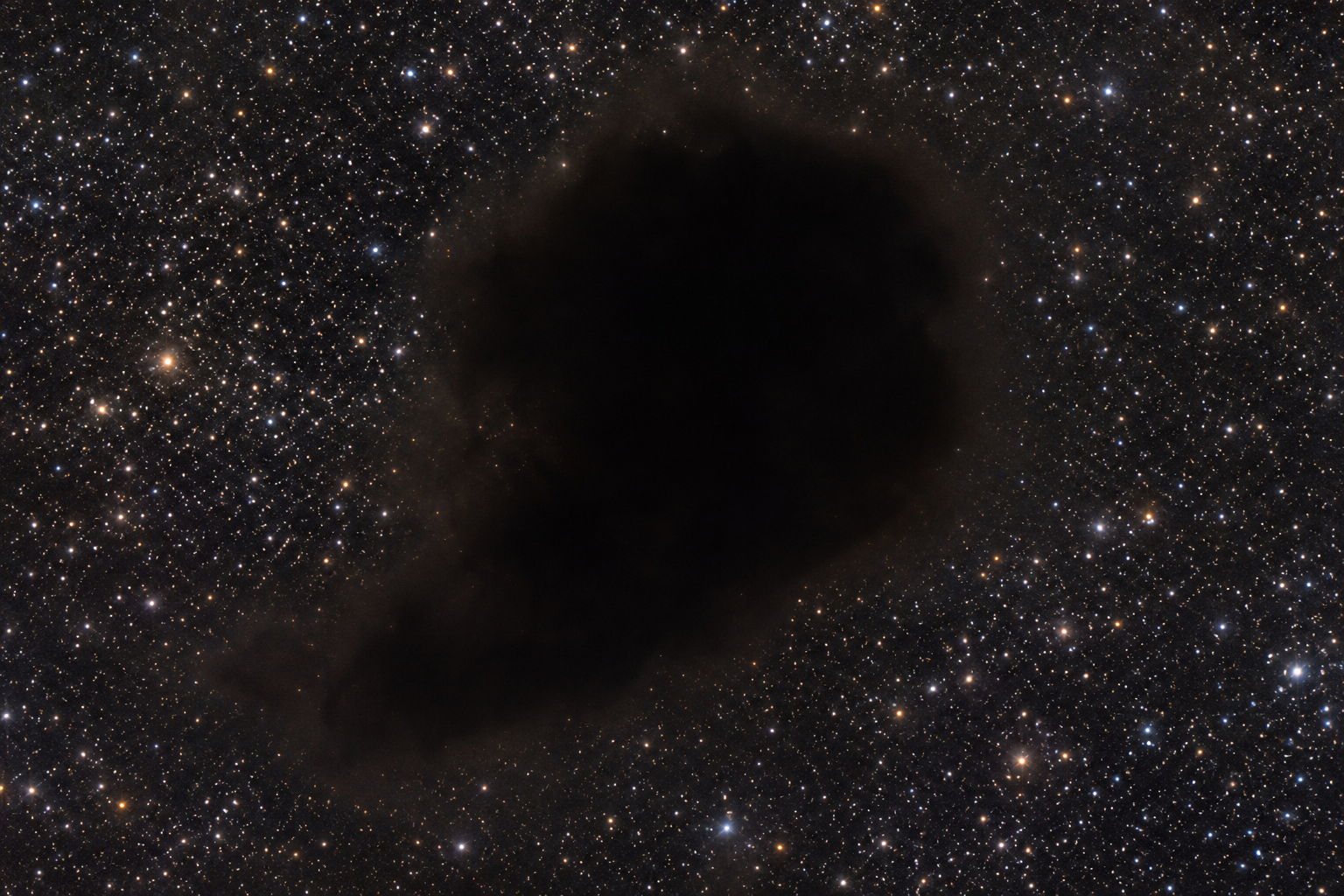
Explanation: NASA poses a striking question about the image: Where have all the stars gone? According to the agency’s explanation, what was once thought to be a hole in the sky is now recognized by astronomers as a dark molecular cloud. In this region, a dense concentration of dust and molecular gas absorbs nearly all the visible light coming from background stars.
NASA says the ominously dark environment helps make the interiors of molecular clouds some of the coldest and most isolated places in the universe. Among the best-known dark absorption nebulae is Barnard 68, the cloud shown in the image toward the constellation of the Snake Carrier, or Ophiuchus.
The absence of visible stars at its center indicates that Barnard 68 is comparatively close, according to NASA. Measurements place the cloud about 500 light-years from Earth and half a light-year across.
Scientists do not know precisely how molecular clouds such as Barnard 68 originate. NASA notes, however, that these clouds are themselves likely locations for new stars to form. Research has indicated that Barnard 68 is likely to collapse and produce a new star system. Although the cloud blocks visible light, observers can see through it using infrared light.
Tomorrow’s Picture: open space
Date: November 29, 2026
Credit: FORS Team, 8.2-meter VLT Antu, ESO
Authors and editors: Robert Nemiroff, Jerry Bonnell, Cecilia Chirenti, Keighley Rockcliffe
APOD is a service of ASD at NASA / GSFC, NASA Science Activation and Michigan Tech. U.
Yesterday’s Image: APOD: 2026 November 28 – Apollo 17 VIP Site Anaglyph
Tomorrow’s Image
Based on NASA's Astronomy Picture of the Day · Read the original ↗